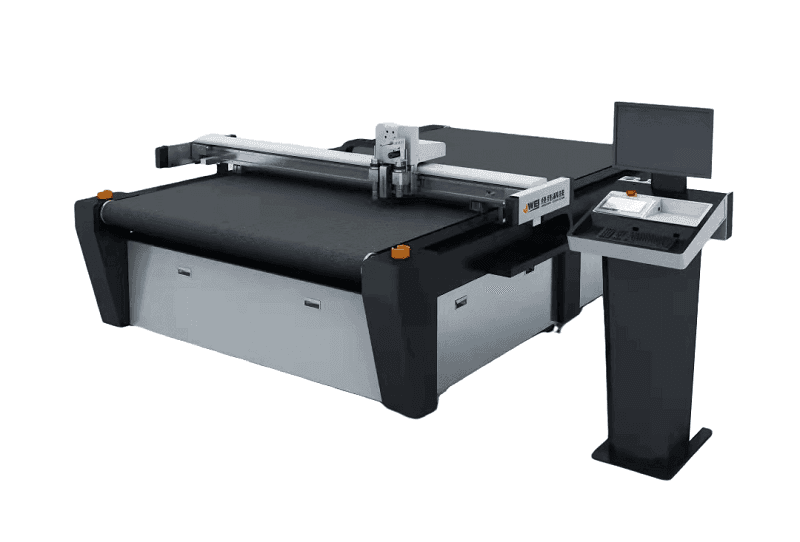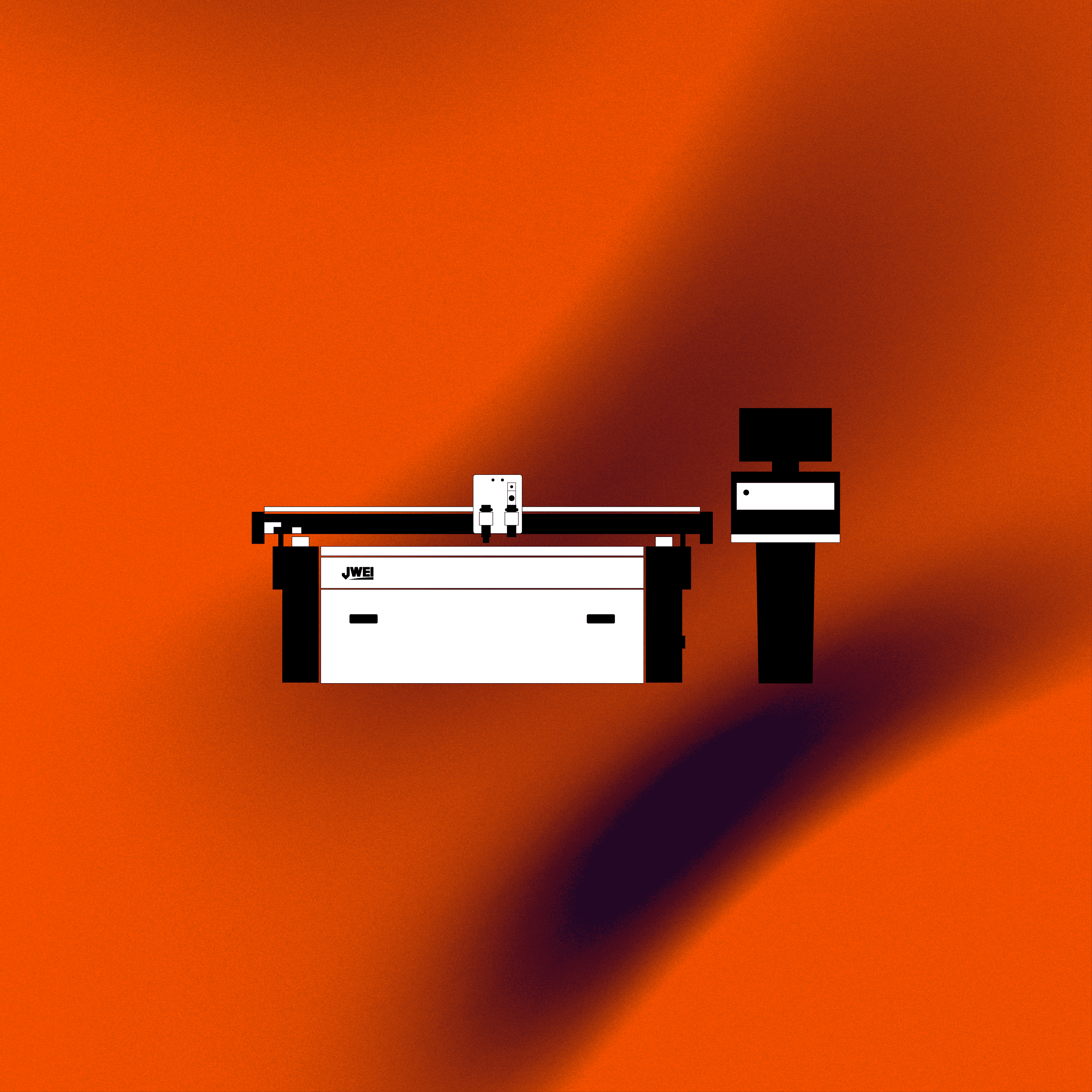

JWEI Digital Cutting Table
The JWEI Digital Cutting Table is a high-precision, industrial-grade finishing platform designed for modern print and display workflows. It brings together cutting, creasing, routing and punching into one system and supports a wide variety of substrates—from vinyl and film through to foam board, honeycomb, acrylic and composite panels. With modular tooling, strong vacuum hold-down, and automatic tool-changer options, this table is built for versatility, speed and accuracy, making it ideal for print suppliers who need one machine to handle finishing across multiple job types.
Key Specifications
Effective cutting area (typical model): 1600 × 2500 mm / 2100 × 3100 mm / 3200 × 3000 mm
Maximum cutting speed: Up to ~1200 mm/s (material-dependent)
Repeat precision: ±0.05 mm
Maximum cutting thickness: Up to ~50 mm for typical heavy substrates
Tooling: Oscillating knife, rotary knife, router module (up to 1800 W option), creasing wheel, kiss-cut tools etc.
Vacuum hold-down: Zoned vacuum bed for secure fastening of materials during cutting
Power supply: AC 380 V ±10% (typical industrial)
Benefits
This cutting table enables print suppliers to consolidate finishing processes: instead of having separate machines for vinyl cutting, board routing, creasing and punching, the JWEI platform handles them in a single modular system. The high speed and precision reduce waste and turnaround times, while the wide size options and tooling flexibility support both high-volume signage runs and premium finishing jobs (such as acrylic displays or honeycomb panels). Configurable tool heads and automatic tool changers allow fast changeover between jobs, increasing uptime and reducing manual intervention. The robust vacuum system ensures media stays flat, enabling consistent, high-quality cuts even on lighter or sub-optimal boards.
Designer / Production Tips
When designing for this platform, it’s important to specify substrate thickness, type and intended finish early on so the correct tool configuration (knife, router, creasing wheel) is prepared. For jobs with internal routing, V-grooves or complex finishing, indicate the requirement for the router module or automatic tool changer. Although the maximum speed is very high, fine detail or heavy materials will run slower – building realistic production timing into job scheduling helps avoid bottlenecks. For large nested layouts, ensure your design includes clear registration marks if pre-printed media is used, and avoid extreme bleed allowances beyond the machine’s vacuum zone. Additionally, when switching between rigid and roll substrates ensure correct bed setup and vacuum zone configuration, and always verify the material falls within the machine’s rated thickness and size to avoid mis-feeds or increased maintenance.